
Image gallery
Click on any image to enlarge.
Events
October 15, 2026
.
November 17, 2026
.
December 10, 2026
.
January 14, 2027
.

CATCH Apprenticeships Register Your Interest
CATCH Apprenticeships
Redwood Park Estate, Kiln Lane, Stallingborough, North East Lincolnshire, DN41 8TH
Apprenticeship
Level 3
Please note - For this apprenticeship you will need to find an employer to give you a placement, the provider may help you with finding one.
Available start dates
Available start dates
Wednesday, 01 September 2027
Once you have registered your interest via the CATCH website, you will be contacted to start the following application process to apply for our company vacancies:
Stage 1 - Register Your Interest Via Our Website;
Stage 2 - Aptitude and Selection Assessment;
Stage 3 - CATCH Interview Workshop;
Stage 4 - Employer Event & Apply to Employer Vacancies;
Stage 5 - Employer Selection and Interview;
Stage 6 - Employer Offer;
Stage 7 - Apprenticeship offers.
CATCH Apprenticeships
3 Year(s)
Full time
Daytime/working hours
Course Summary
APPLICATIONS FOR 2027 START WILL BE LIVE SHORTLY
We work with over 300 employers across the Yorkshire & Humber region, in sectors such as Chemicals, Oil & Gas, Cosmetics, Food & Drink, Energy and Pharmaceuticals, and its associated supply chain. Our apprenticeships align directly with industry requirements and will provide you with a pathway to fantastic career opportunities in these exciting innovative companies.
By utilising our industry knowledge, networks and connections and working closely with employers, we have developed specialised and enhanced apprenticeship programmes ready to deliver to the next generation of industry professionals. Encompassing Mechanical, Electrical, Instrumentation, Process Operations, Welding, Pipefitting and Plater specialisms.
Our CATCH facility in Stallingborough is unmatched. In addition to first-class engineering workshops and classrooms our site also features the National Centre for Process & Manufacturing, the UKs leading end-to-end live process operations training plant, which includes a state of the art control center, a simulator suite, an impressive tank farm and a fully functioning process facility. Plus the new cutting-edge Welding and Pipefitting Hub.
To apply for our vacancies you must have registered your interest with CATCH via our website.
Course Details
APPLICATIONS FOR 2027 START WILL BE LIVE SHORTLY. Our apprenticeships are all Level 3 employer sponsored courses, covering the following trades:
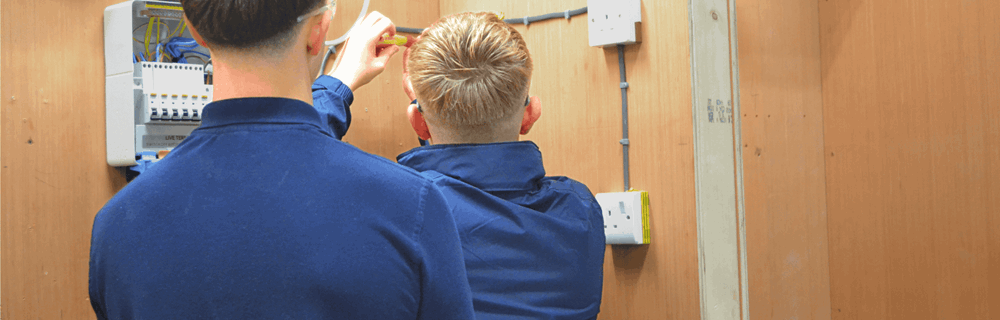
Electrical Technician - An electrical technician is a professional working in electrical installations such as domestic properties, offices, commercial units and industrial sites. They carry out monitoring, maintenance, repair and replacement of electrical plant, equipment and systems. An apprenticeship in this trade will require learning knowledge and skills that you can apply in a work environment. You will also learn how to work as part of a team in order to carry out the required tasks. People in this trade are likely to work in the petro-chem, manufacturing, power generation and contracting industries. Due to the nature of this trade, electrical technicians have a large area of professional development and career opportunities, from local opportunities to worldwide.
Instrumentation Technician - An instrumentation technician is a professional working to develop, design, install and maintain instrumentation for control systems used in an industrial or manufacturing environment. They work on sensors and equipment used to measure, monitor, and control physical processes. An apprentice will learn how these instruments work and how to apply effective control methods to industrial processes which could include the use of PLC systems. You will have a good analytical mind and be able to apply yourself to problem solving and root cause analysis. Given their role in ensuring safety efficiency and control in industrial processes, instrumentation technicians can explore many career pathways throughout the manufacturing sector.
Mechanical Technician - Mechanical engineering involves the design, testing, development and maintenance of mechanical systems and products. As a mechanical engineer you will be expected to remove and service old equipment, as well as installing new machines. You will also ensure that the machinery and equipment are kept in good working order and meets regulatory standards, Performing periodic inspections on plant, machinery and automated systems. There are a variety of types of mechanical engineers which vary across a large range of sectors. However, CATCH mainly focus on Manufacturing and Industrial mechanics. This route involves a diverse level of training which can be explore within different lines of this profession. Exploring career opportunities across the world.
Process Operator - Process Operators combine ingredients according to formulas to generate bulk quantities working in sectors such as Oil Refinery, Power Generation, Plant, Food Production Plant, Chemical Process Plant, Water Treatment Plant, and Many More. Process Operators work with a variety of chemicals, including Solids, Liquids and Gasses. In which, this pathway is great for those who enjoy Maths, Science and being practical. There are many avenues for process operators to go down, as everything starts from a process. Therefore, career opportunities can spread from local to worldwide careers.
Pipe Welder - The pipe welder is a skilled craftsman who joins, repairs and builds pipes to create specified structures. There are many avenues for pipe welders to explore within their working career, such as; construction, Water industry, Oil and gas, fabrication, power stations and many more. Pipe welders will have a variety of working conditions, locations and can vary into extreme working conditions. Pipe welding is a universal career which offers multiple opportunities and levels to employment, from working in small local companies to large multi-national organisations.
Plate Welder - The broad purpose of a plate welder is to manually weld plate and structural components to high standards of quality. This will involve fabrication, construction or repair of fabricated plate assemblies, extrusions and structural components used often used to fabricate larger components and assemblies. You’ll learn to weld to internationally recognised quality standards using more than one manual arc welding process in at least one material group. Plate welding can include a number of different welding positions and materials with each welding process requiring different equipment, assemblies, skills and techniques. Plate Welders can be employed in any organisation size from small local companies to large multi-national organisations
Metal Fabricator - The broad purpose of the occupation is to carry out metal fabrication work using things such as rolled steel joists, columns, channels, steel plate and metal sheet etc. Work includes manufacturing bridges, oil rigs, ships, petro-chemical installations, cranes, platforms, aircraft, automotive and machinery parts, sheet metal enclosures, equipment supports, and anything that can be fabricated out of metal. Fabricators can work alone or in teams, in factories or on operational sites. Fabricators use a large range of metals including steel, aluminium and titanium at a range of thicknesses from 0.5mm up to over 20mm. The size and weight of the fabrications can range from components that can easily be picked up by hand, to massive structures that require several cranes to manipulate. In their daily work, an employee in this occupation interacts with planners, supervisors, inspectors, designers, welders, pipefitters, fitters, machinists, riggers, steel erectors, stores personnel, painters and many others involved in manufacturing, production, maintenance and repair.
Pipefitter - The Pipefitter is a vital Engineering Construction role, working within strictly defined processes and procedures to exacting standards. This often involves working on major infrastructure projects for example power stations and oil and gas facilities both in the UK and overseas Engineering Construction Industry. The Pipefitter can work in hazardous environments which can include working at height, over water and in confined spaces. The Pipefitter role encompasses the positioning, assembly, fabrication, maintenance, repair and decommissioning of piping systems within Engineering Construction, both on construction sites or at commercial fabrication facilities.
How will it be delivered and assessed?
Each trade will consist of an End Point Assessment (EPA). Where you will be assessed by a multiple-choice knowledge test, structured professional review supported by portfolio and a practical skills test.
Entry requirements
You must have an achieved or predicted grade of 4's/C's (or above) in GCSE Maths, GCSE English Language, to register your interest in an apprenticeship via CATCH.
If you are registering your interest in a Process Operator apprenticeship, you are also required to achieve a grade 4 within GCSE Science.
If you are providing predicated grades please click the link below to download the school reference form please ask your school/college tutor or representative to complete it and return it to us as soon as possible -
https://catchuk.org/catchapprenticeships/
Your application through Log On Move On or Lincs 2, does not contribute to you registering your interest for CATCH. You must register your interest directly via our website on the link below to start the application process:
Once you have registered your interest via the CATCH website, you will be contacted to start the application process below to apply for our company vacancies:
Stage 1 - Register Your Interest Via Our Website
Stage 2 - Aptitude and Selection Assessment
Stage 3 - CATCH Interview Workshop
Stage 4 - Employer Event & Apply to Employer Vacancies
Stage 5 - Employer Selection and Interview
Stage 6 - Employer Offer
Stage 7 - Apprenticeship offers
Additional information
For more courses like this, check our courses page.


